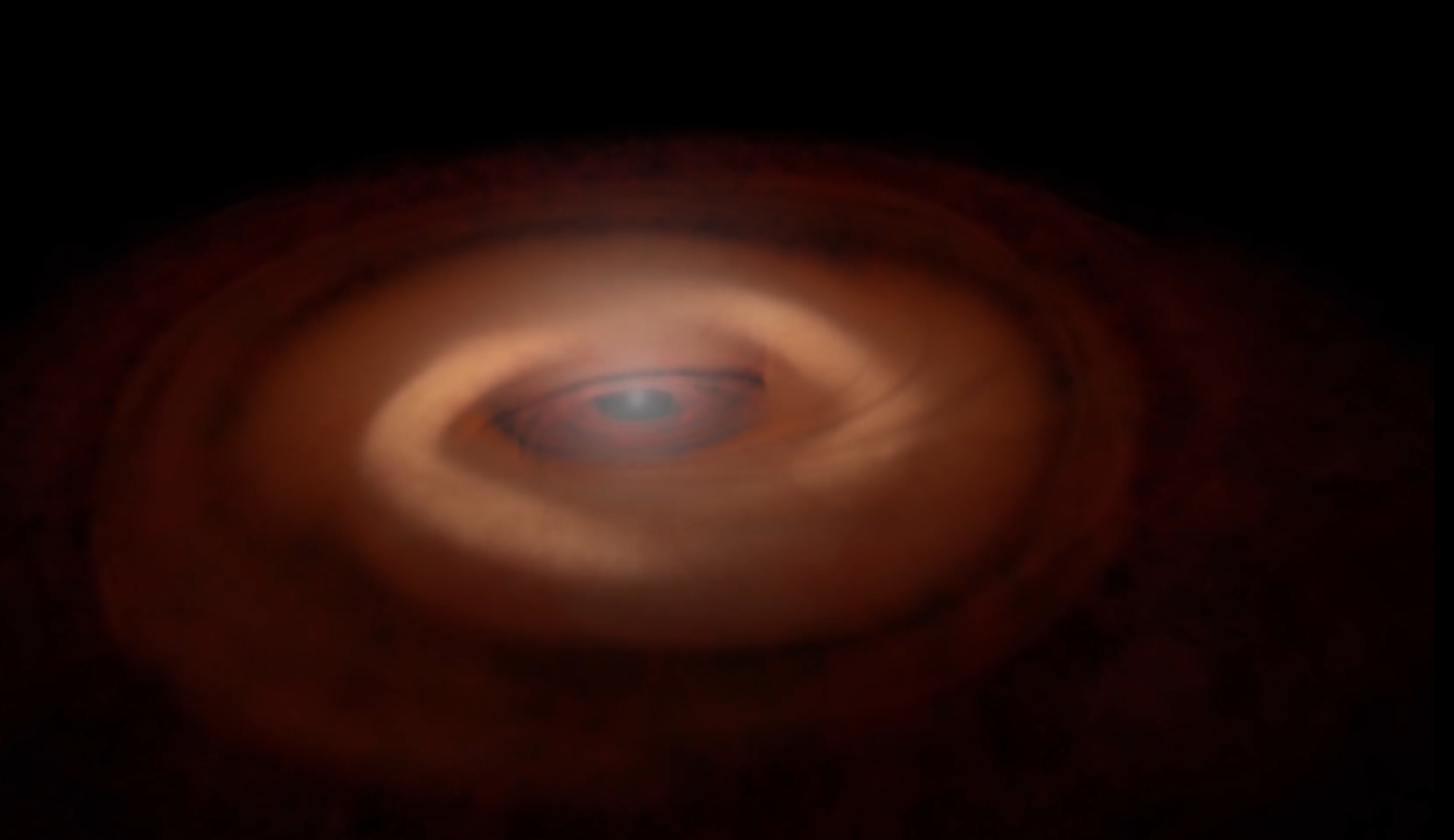
How Our Solar System Was Born
Earth is a planet in our solar system, orbiting the Sun for approximately 4.6 billion years 1 The age of the Earth in the twentieth century
Dalrymple, G. B. (2001)
Geological Society of London Special Publications
DOI: 10.1144/GSL.SP.2001.190.01.14 .
Its formation occurred almost simultaneously with the Sun itself.
Therefore, Earth was not born in isolation, but rather as a product of the solar system’s overall evolution.
The formation of the Sun, the establishment of the protoplanetary disk, and the gradual emergence of planets collectively shaped Earth’s initial state.
In physical terms, the formation of the solar system and the formation of Earth are manifestations of the same evolutionary process unfolding at different scales.
This article will trace back to the origins that triggered the birth of our solar system, following the demise of a previous generation of stars and their supernova explosions, and along the process of matter aggregation and structure formation, describe the overall trajectory from nebular collapse to planetary formation, where Earth’s emergence will naturally become apparent.
Video: The Birth of Our Solar System - A visual journey through the formation of our cosmic neighborhood.
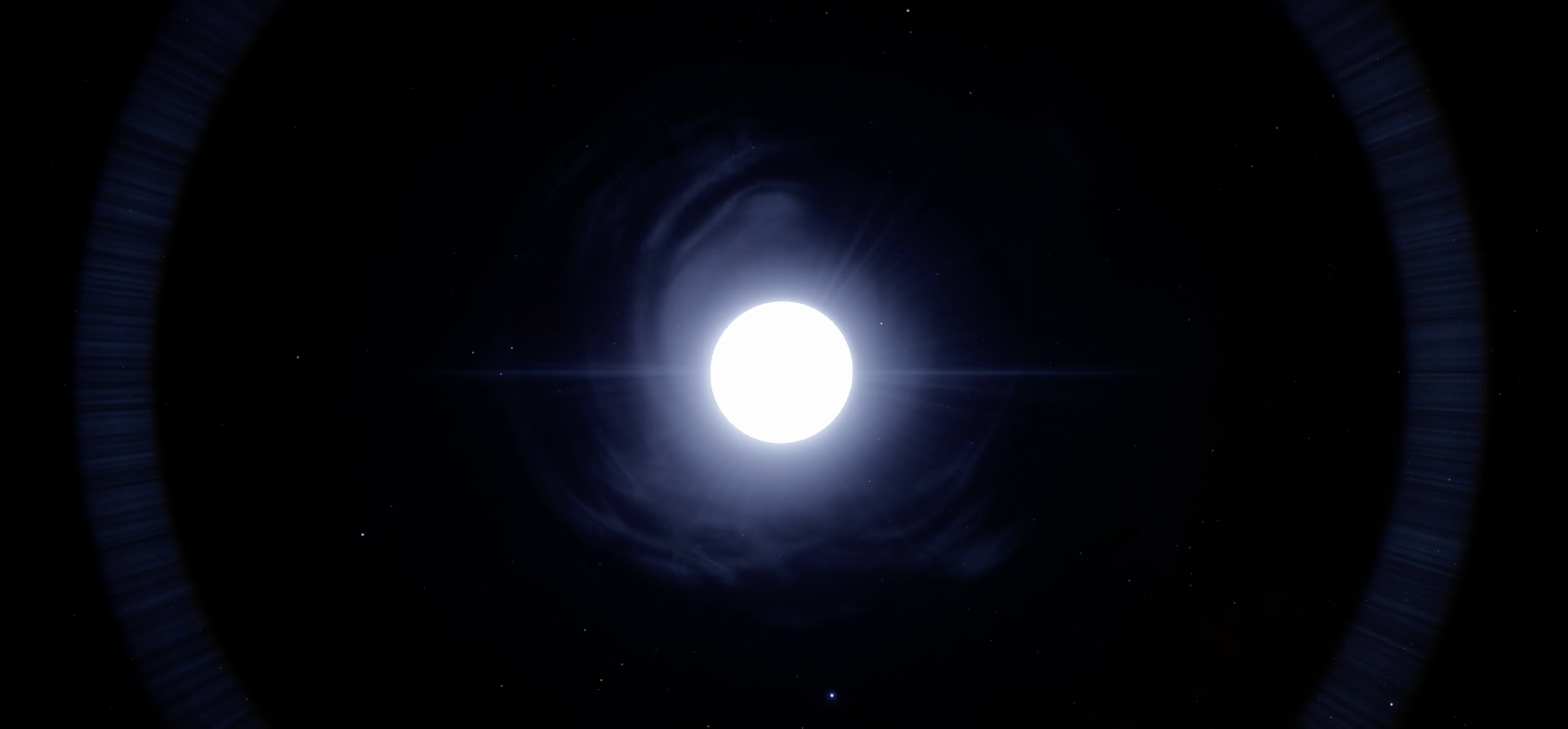
Figure: A blue supergiant star, representing a generation of massive stars that existed before our solar system’s birth. Its surface temperature reaches tens of thousands of Kelvin, far exceeding the Sun’s approximately 5,800 Kelvin 2 The evolution and explosion of massive stars
Woosley, S. E., Heger, A., Weaver, T. A. (2002)
Reviews of Modern Physics
DOI: 10.1103/RevModPhys.74.1015 .
Traceable Origins: The Generation of Giant Stars
Shortly before the birth of the Sun, in an unremarkable spiral arm region of our galaxy, there existed a generation of extremely massive stars.
Some of these stars had initial masses at least 8 times that of our present-day Sun 2 The evolution and explosion of massive stars
Woosley, S. E., Heger, A., Weaver, T. A. (2002)
Reviews of Modern Physics
DOI: 10.1103/RevModPhys.74.1015 ,
equivalent to 2.6 million Earth masses.
Due to such immense mass, they were destined from birth to follow an evolutionary path drastically different from that of the Sun.
Throughout most of a star’s life, its interior maintains an approximate state of hydrostatic equilibrium 12 Stellar Structure and Evolution
Kippenhahn, R., Weigert, A., Weiss, A. (2012)
Springer-Verlag
DOI: 10.1007/978-3-642-30304-3 , as shown in Figure 1.
Inward gravitational force balances with the outward pressure gradient. This outward support does not come directly from the force of nuclear fusion, but rather from the energy released by fusion maintaining high internal temperatures, thereby establishing sufficient thermal and radiation pressure in the gas to form an outward pressure gradient that counteracts gravity at each radius.
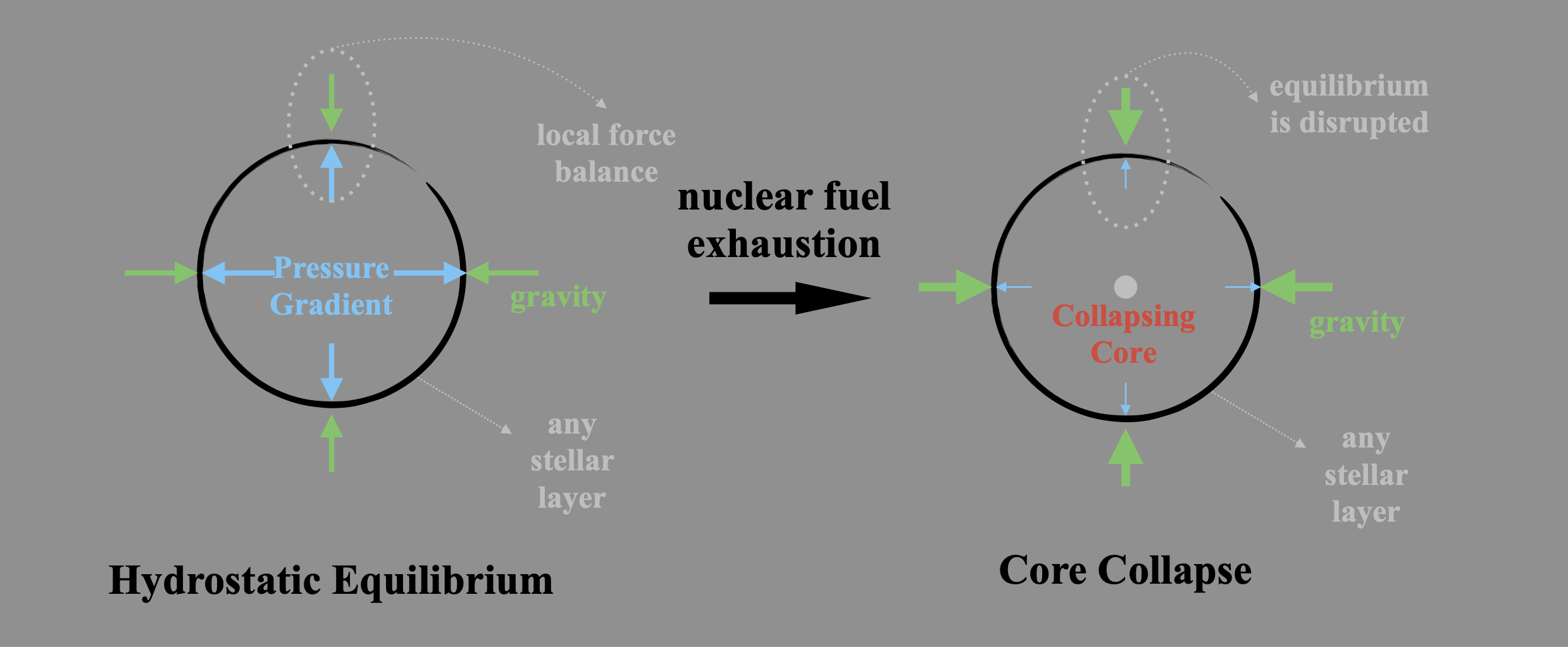
Figure 1: Comparison of hydrostatic equilibrium in stellar interiors and core collapse after instability. Left: During the phase when nuclear fusion continuously provides energy, inward gravitational force balances with outward pressure gradient at each layer of material, maintaining stable stellar structure. Right: When nuclear fuel in the core is exhausted, the pressure gradient can no longer counteract gravity, causing rapid core collapse and setting the stage for subsequent supernova explosion.
As the star’s internal nuclear fuel is successively depleted, nuclear fusion reactions sequentially proceed through hydrogen, helium, and higher burning stages, progressively synthesizing elements such as carbon, oxygen, and silicon, and ultimately forming an iron-peak dominated core during the silicon burning stage, as shown in Figure 2.
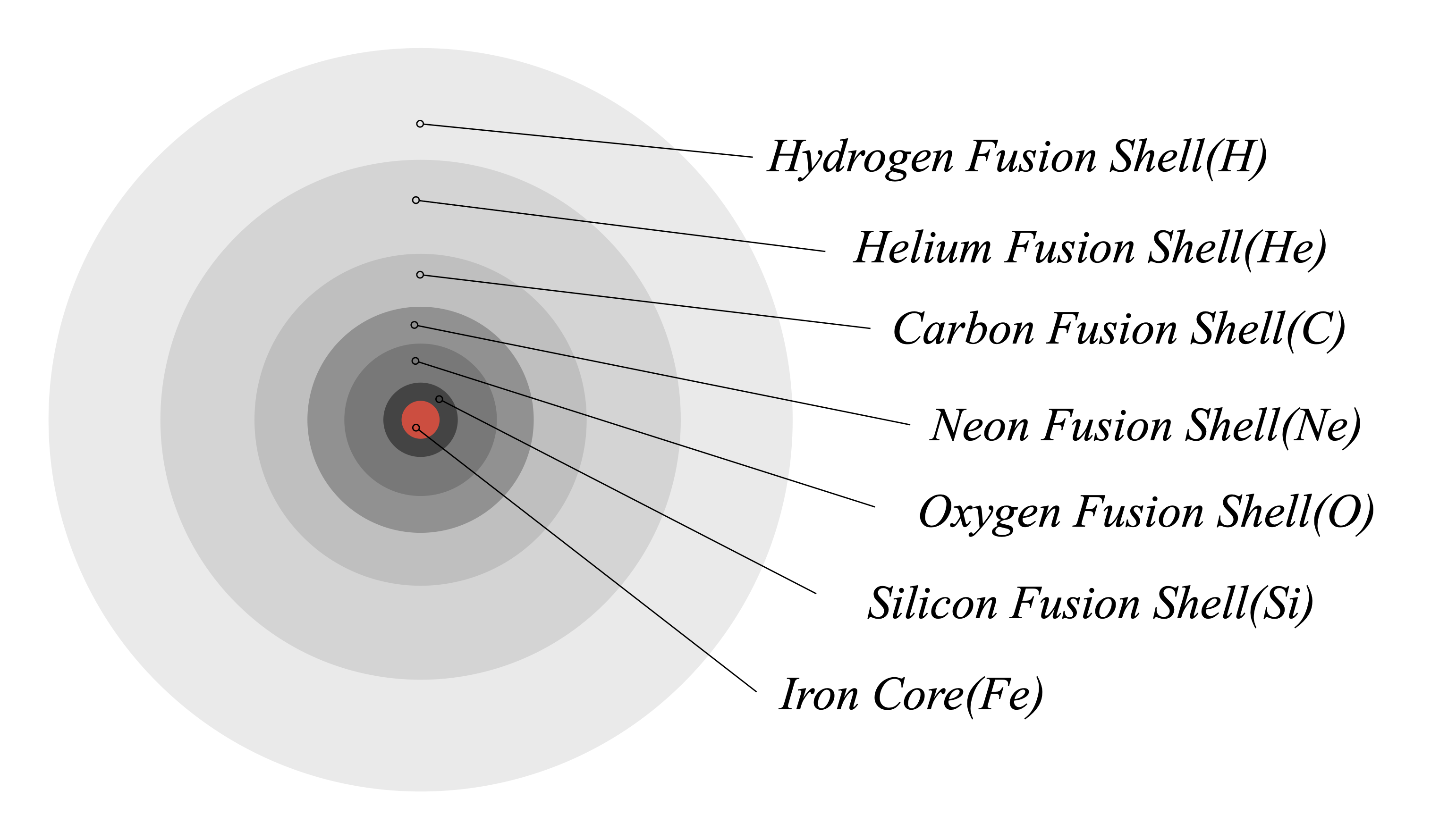
Figure 2: Schematic of the onion shell structure in stellar interiors. Different elemental layers wrap successively, forming stratified nucleosynthesis zones.
This process belongs to the late stages of stellar nucleosynthesis.
Since iron nuclei cannot release energy through fusion, the outward energy supply terminates.
At this point, electron degeneracy pressure becomes the final barrier against gravity. When it can no longer support the core mass,
core collapse inevitably occurs 2 The evolution and explosion of massive stars
Woosley, S. E., Heger, A., Weaver, T. A. (2002)
Reviews of Modern Physics
DOI: 10.1103/RevModPhys.74.1015 .
This collapse occurs on an extremely short timescale.
Subsequently, the enormous energy released propagates outward as a shockwave, violently ejecting the star’s outer layers into the surrounding interstellar space.
This event is a core-collapse supernova explosion 4 How massive single stars end their life
Heger, A. et al. (2003)
The Astrophysical Journal, Volume 591, Issue 1, pp. 288-300.
DOI: 10.1086/375341 .
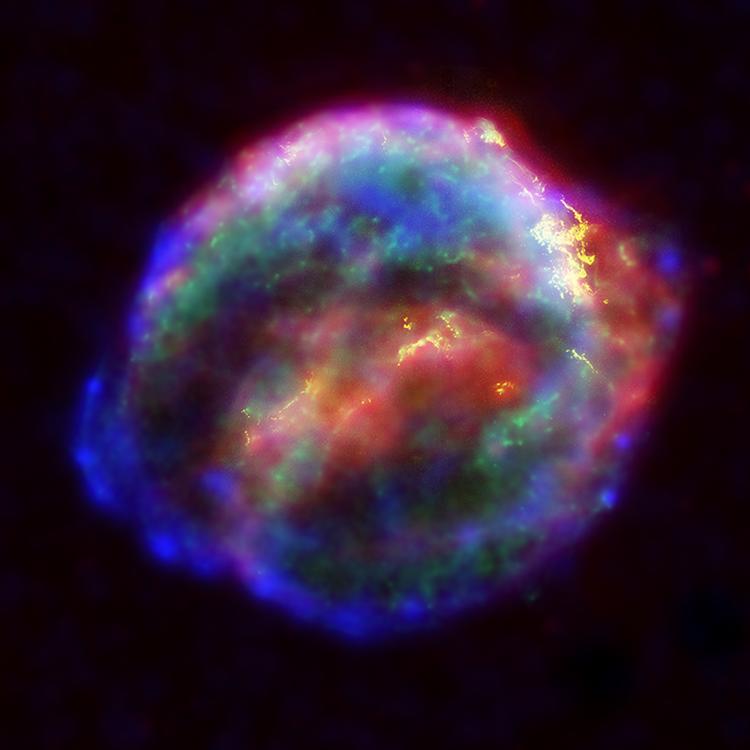
Figure 3:
Supernova explosion. The star’s outer layers are violently ejected, forming an outward-expanding shockwave.
This object is the remnant of the last supernova explosion in our galaxy observed with the naked eye in human history,
specifically known as Kepler’s Supernova Remnant (from Kepler’s supernova of 1604, SN 1604).
Located in the direction of Ophiuchus, approximately 13,000 light-years from Earth.
This image shows a real supernova explosion phenomenon and its subsequent evolutionary results,
used to illustrate typical characteristics of supernova explosions in terms of physical mechanisms and energy scales, rather than the specific objects involved in our solar system’s formation 13 Three Great Eyes on Kepler Supernova Remnant
NASA/ESA/JHU/R.Sankrit & W.Blair (2004)
NASA .
Supernova Explosion: Termination and Trigger
A supernova explosion releases enormous energy in an extremely short time and ejects high-velocity matter into the surrounding space. This ejected stellar material,
along with its kinetic energy and radiation, collectively forms an outward-expanding shockwave 7 Sequential formation of subgroups in OB associations.
Elmegreen, B. G., Lada, C. J. (1977)
Astrophysical Journal
DOI: 10.1086/155302 .
This shockwave is not an abstract “energy front” but consists of real plasma, atomic nuclei, and dust particles—material that was previously contained within the star.
In the early stages of the explosion, the shockwave propagates at speeds of thousands of kilometers per second, far exceeding the sound speed in the interstellar medium, thus manifesting as a strong shock 14 Interstellar Shock Waves
Draine, B. T., McKee, C. F. (1993)
Annual Review of Astronomy and Astrophysics
DOI: 10.1146/annurev.aa.31.090193.002105 .
As time progresses, the shockwave continues expanding outward, potentially reaching tens of light-years or more. During this process,
the shockwave continuously interacts with the surrounding tenuous interstellar medium, decelerating, thickening, and compressing the unevenly distributed gas and dust at its leading edge.
For other interstellar systems in the vicinity, this shockwave acts as an external perturbation. It does not “create” new matter, but can significantly alter the physical state of existing systems: local density increases, pressure and temperature undergo abrupt changes, and molecular clouds previously in stable or metastable states may be pushed toward the critical conditions for gravitational instability.
It is in this context that supernova explosions are recognized as one of the important triggering mechanisms for star formation. They mark both the end of one generation of stars and potentially the starting point for the birth of another generation of stellar systems. Even in today’s universe, we can still observe supernova explosions and their remnants. Expanding supernova remnants are clearly visible across multiple electromagnetic wavelength bands, recording the results of long-term interactions between shockwaves and the interstellar medium, and providing direct evidence for studying stellar evolution and the interstellar environment.
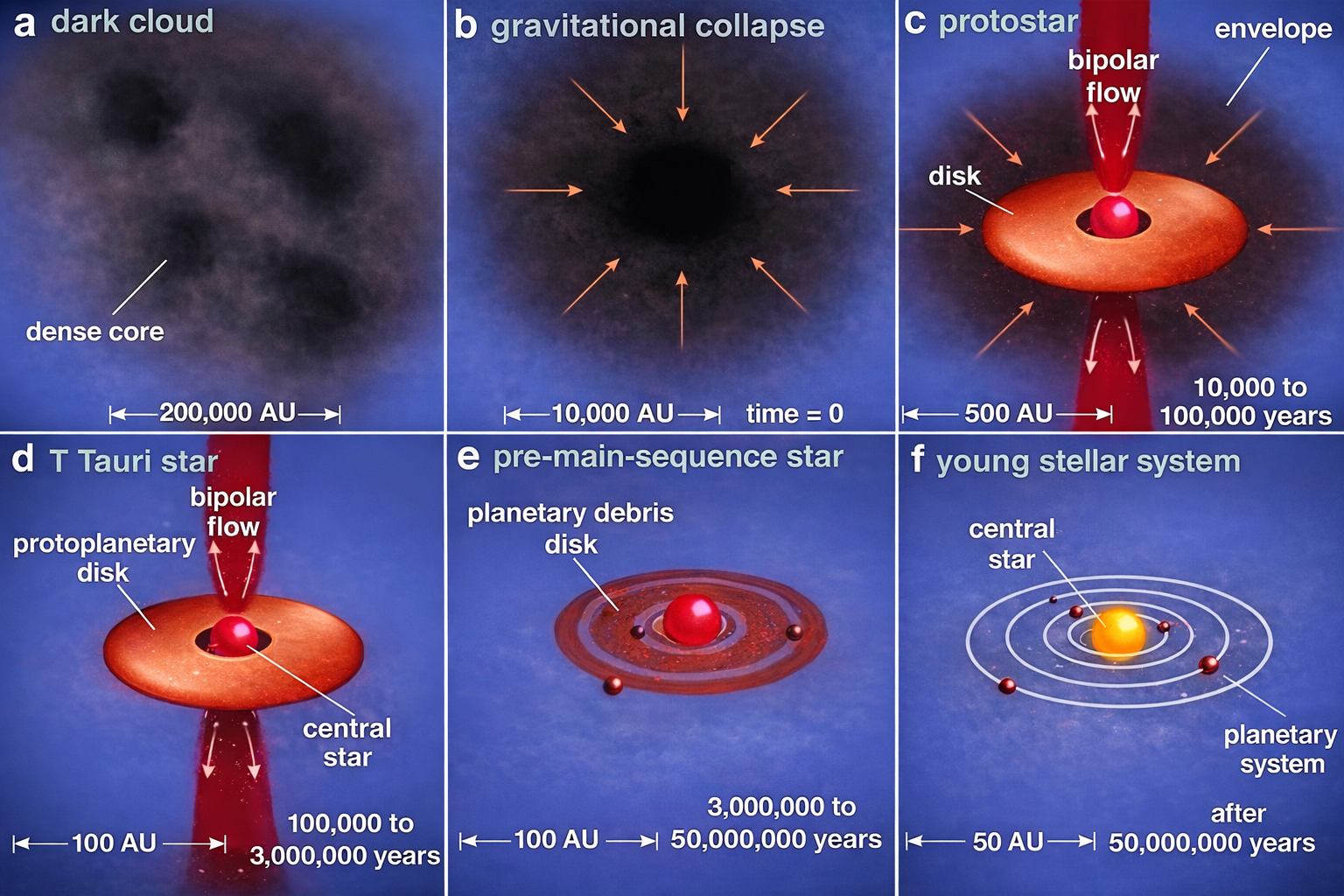
Figure: Nebular collapse process 20 Spitzer Science Center - Galaxy Science Compendium
Spitzer Science Center (2008)
NASA/JPL-Caltech .
a. Molecular cloud: A cold and tenuous interstellar molecular cloud, where localized regions have slightly higher density than their surroundings, forming potential dense cores, but no gravitational collapse has yet occurred overall.
b. Gravitational collapse: Under external perturbation or internal instability conditions, the dense regions of the molecular cloud begin gravitational collapse, with matter gradually converging toward the center and core density continuously increasing.
c. Protostar stage: The collapsed dense core evolves into a protostar, still enveloped by surrounding gas; simultaneously, angular momentum results in the formation of a protoplanetary disk, accompanied by bipolar outflows that carry away some material and angular momentum from the system.
d. Pre-main-sequence star (T Tauri star): The central star enters the pre-main-sequence stage, the envelope gradually clears away, the protoplanetary disk structure becomes clearer, and stellar radiation and outflows continue to influence the distribution and evolution of disk material.
e. Planetary debris disk stage: As gas in the protoplanetary disk largely dissipates, the system primarily retains solid material; debris produced by collisions and small bodies in the disk constitute the planetary debris disk, marking the later stage of planetary formation.
f. Young stellar system: The central star approaches stability, the planetary system gradually establishes itself, planets orbit along relatively stable paths, and only a small amount of disk-like or dispersed material remains around the star.
The Birth of the Sun: Nebular Collapse
Supernova explosions originate from the destruction of massive stars. During this process, vast amounts of matter and energy are ejected into the surrounding interstellar space, continuing to influence the interstellar environment within their propagation range over timescales of tens of thousands to hundreds of thousands of years.
Among these affected regions was an unremarkable interstellar molecular cloud. It was the precursor to our solar system. At this stage, the system had not yet formed today’s solar system structure. It consisted only of tenuous and extensive interstellar gas and dust, primarily molecular hydrogen, mixed with small amounts of heavy elements and dust particles. The molecular cloud’s overall temperature was extremely low, typically only tens of Kelvin, and the motion of its internal material was very slow.
Although the molecular cloud’s total mass could be enormous, its interior did not immediately undergo overall collapse. This was because, in its then-current state, inward gravity and outward thermal motion, turbulence, and magnetic field effects maintained an approximate balance overall. In the cloud’s central region, local density was insufficient to trigger sustained gravitational accretion, keeping the system in a relatively stable state for extended periods.
However, this balance was not unbreakable.
When the shockwave from a nearby supernova explosion reached this location, the molecular cloud began experiencing sustained external perturbation.
The shockwave compressed the cloud’s already denser regions, changing the gas’s direction of motion and distribution structure, causing some material to gradually converge toward the cloud’s central region.
As the central region’s mass continuously increased, local gravity began to dominate.
Once this region’s mass and density exceeded the critical conditions for gravitational instability, the molecular cloud’s core entered an irreversible collapse process 15 The collapse of molecular cloud cores and the formation of stars
Larson, R. B. (2003)
Reports on Progress in Physics
DOI: 10.1088/0034-4885/66/10/R03 .
During collapse, the central region’s density and temperature rapidly increased, and a new dense object gradually formed. This was a protostar—the starting point of the Sun’s birth.
Protoplanetary Disk: Cradle of Planets
Collapse did not direct all matter into the star itself. Near the center, gravity as the primary influence causes matter to converge toward the center.
At greater distances from the center, gravity weakens and the external forces on matter approach balance, preventing it from being drawn toward the center.
However, the angular momentum carried by the original molecular cloud cannot vanish into thin air 16 Angular momentum transport in protostellar disks
Salmeron, Raquel ; Königl, Arieh ; Wardle, Mark (2007)
Monthly Notices of the Royal Astronomical Society
DOI: 10.1111/j.1365-2966.2006.11277.x . Therefore, gas and dust not directly accreted into the protostar orbit it under gravitational influence,
and gradually spread out near its equatorial plane,
forming a flat and extended structure. This structure is the protoplanetary disk 8 Protoplanetary disks and their evolution
Williams, J. P., Cieza, L. A. (2011)
Annual Review of Astronomy and Astrophysics
DOI: 10.1146/annurev-astro-081710-102548 .
In the protoplanetary disk, gas and dust move slowly along approximately circular orbits. Temperature, density, and material composition vary significantly across different disk regions, providing conditions for subsequent material aggregation and differentiation. It is at this scale that the process of planetary formation unfolds. Over the next several million years, dust and gas in the disk will undergo continuous collision, aggregation, and reorganization, gradually giving birth to the various celestial bodies in our solar system.
Solar System Composition: Structure and Zones
The solar system was born from an ancient interstellar nebula. It once nurtured stars and was also torn apart in explosions; in the long cosmic cycle, it experienced multiple episodes of aggregation, disintegration, and regeneration. Before the solar system’s birth, around 4.6 billion years ago or even earlier, this nebula already existed. It was very likely the legacy of an even earlier generation of supernova explosions, its internal matter not directly generated by the primordial universe, but rather the result of multiple generations of stellar evolution and reshaping.
This point can be directly confirmed from the solar system’s composition 17 Solar System Abundances of the Elements
H. Palme, K. Lodders, A. Jones (2013)
Planets, Asteriods, Comets and The Solar System
DOI: 10.1016/B978-0-08-095975-7.00118-2 . Solar system material widely contains heavy elements such as iron, silicon, carbon, and oxygen, as well as traces of water molecules and hydrated minerals. These elements could not form directly in the early universe; they could only be produced through stellar nucleosynthesis and ejected into interstellar space when stars ended their lives.
Therefore, the solar system itself carries the chemical memory left by multiple previous generations of stellar evolution.
However, this material is not uniformly distributed in the solar system. During the protoplanetary disk stage, with significant radial variations in temperature, pressure, and radiation environment, different types of material could be retained or volatilized at different distances. In regions close to the Sun, high temperatures made it difficult for volatile materials to persist long-term, leaving only heat-resistant rock and metal components to condense; while in more distant regions, the cold environment allowed ice, water, and light element compounds to be abundantly retained.
It was during this process that the solar system gradually exhibited clear structural zones: With the inner high-temperature, dense region at one end and the outer cold, volatile-rich region at the other. This zoning was not a result formed after the fact, but an inevitable structure determined jointly by physical conditions and material properties at the solar system’s birth.
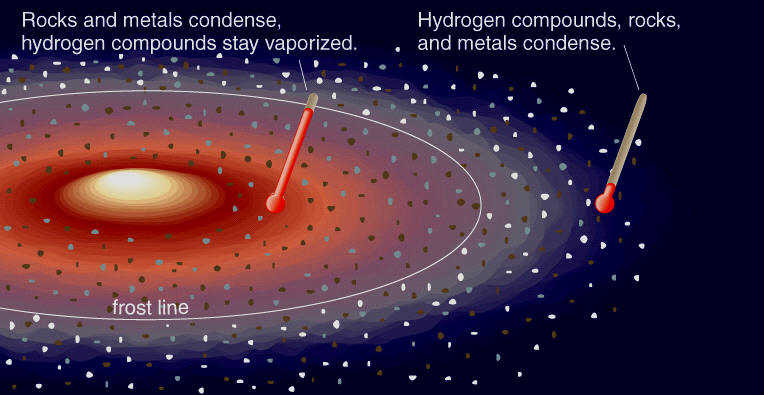
Figure: In the protoplanetary disk, temperature decreases with distance from the central star, forming distinct radial zones. Inside the frost line, water exists primarily in gaseous form and cannot readily participate as a solid in planetary accretion; outside the frost line, water and other volatile materials can stably condense as ice, thus significantly affecting the composition and mass distribution of different planets 21 Frost Line in Protoplanetary Disk
I. Glozman (2020)
Highline College Astronomy Notes .
Planetary Formation: From Dust to Worlds
After the protoplanetary disk formed, the early solar system remained in a highly dynamic state. At this point, true planets did not yet exist, only abundant gas and solid dust orbiting the newborn star.
This material was not static. Within the protoplanetary disk, gas flows, turbulence, and orbital shear caused dust to continuously collide. On microscopic scales, electrostatic forces and surface adhesion allowed some collisions to be retained, with solid particles gradually aggregating to form larger structures 9 The growth mechanisms of macroscopic bodies in protoplanetary disks
Blum, J., Wurm, G. (2008)
Annual Review of Astronomy and Astrophysics
DOI: 10.1146/annurev.astro.46.060407.145152 .
Initially, these solids were merely micron-sized dust particles. Over time, they progressively aggregated into centimeter-scale, then meter-scale clumps.
When sizes grew sufficiently for gravity to begin playing a role, these clumps evolved into larger bodies—planetesimals 10 The multifaceted planetesimal formation process
Johansen, A. et al. (2014)
Protostars and Planets VI. University of Arizona Press
DOI: 10.2458/azu_uapress_9780816531240-ch024 .
Planetesimals typically reached sizes of several kilometers or more. At this stage, gravity became the dominant mechanism, enabling planetesimals to continuously accrete surrounding solid material and grow through frequent collisions and mergers.
As the accretion process progressed, some planetesimals gradually evolved into more massive protoplanets 11 Formation of protoplanets from planetesimals
Kokubo, E., Ida, S. (2000)
Bioastronomy 99 .
This process was not continuous and smooth, but rather accompanied by violent collisions, fragmentation, and reorganization. Meanwhile, gas and dust in the protoplanetary disk were gradually consumed, cleared, or dispersed, and the solar system transitioned from its initial chaotic state into a structure dominated by a few massive bodies.
Among these protoplanets was one body that, over the subsequent tens of millions of years, experienced countless collisions and evolution. 4.6 billion years later, today, it became the world we know—Earth.
References
- The age of the Earth in the twentieth century Dalrymple, G. B. (2001)
Geological Society of London Special Publications
DOI: 10.1144/GSL.SP.2001.190.01.14 - The evolution and explosion of massive stars Woosley, S. E., Heger, A., Weaver, T. A. (2002)
Reviews of Modern Physics
DOI: 10.1103/RevModPhys.74.1015 - An Introduction to the Study of Stellar Structure Chandrasekhar, S. (1939)
Nature
DOI: 10.1038/144130a0 - How massive single stars end their life Heger, A. et al. (2003)
The Astrophysical Journal, Volume 591, Issue 1, pp. 288-300.
DOI: 10.1086/375341 - Synthesis of the Elements in Stars Burbidge, E. M. et al. (1957)
Reviews of Modern Physics
DOI: 10.1103/RevModPhys.29.547 - Theory of Star Formation McKee, C. F., Ostriker, E. C. (2007)
Annual Review of Astronomy and Astrophysics
DOI: 10.1146/annurev.astro.45.051806.110602 - Sequential formation of subgroups in OB associations. Elmegreen, B. G., Lada, C. J. (1977)
Astrophysical Journal
DOI: 10.1086/155302 - Protoplanetary disks and their evolution Williams, J. P., Cieza, L. A. (2011)
Annual Review of Astronomy and Astrophysics
DOI: 10.1146/annurev-astro-081710-102548 - The growth mechanisms of macroscopic bodies in protoplanetary disks Blum, J., Wurm, G. (2008)
Annual Review of Astronomy and Astrophysics
DOI: 10.1146/annurev.astro.46.060407.145152 - The multifaceted planetesimal formation process Johansen, A. et al. (2014)
Protostars and Planets VI. University of Arizona Press
DOI: 10.2458/azu_uapress_9780816531240-ch024 - Formation of protoplanets from planetesimals Kokubo, E., Ida, S. (2000)
Bioastronomy 99
Link - Stellar Structure and Evolution Kippenhahn, R., Weigert, A., Weiss, A. (2012)
Springer-Verlag
DOI: 10.1007/978-3-642-30304-3 - Three Great Eyes on Kepler Supernova Remnant NASA/ESA/JHU/R.Sankrit & W.Blair (2004)
NASA
Link - Interstellar Shock Waves Draine, B. T., McKee, C. F. (1993)
Annual Review of Astronomy and Astrophysics
DOI: 10.1146/annurev.aa.31.090193.002105 - The collapse of molecular cloud cores and the formation of stars Larson, R. B. (2003)
Reports on Progress in Physics
DOI: 10.1088/0034-4885/66/10/R03 - Angular momentum transport in protostellar disks Salmeron, Raquel ; Königl, Arieh ; Wardle, Mark (2007)
Monthly Notices of the Royal Astronomical Society
DOI: 10.1111/j.1365-2966.2006.11277.x - Solar System Abundances of the Elements H. Palme, K. Lodders, A. Jones (2013)
Planets, Asteriods, Comets and The Solar System
DOI: 10.1016/B978-0-08-095975-7.00118-2 - Condensation in the primitive solar nebula Grossman, L. (1972)
Geochimica et Cosmochimica Acta
DOI: 10.1016/0016-7037(72)90078-6 - Planetary Migration in Protoplanetary Disks Richard P. Nelson (2018)
Handbook of Exoplanets
DOI: 10.1007/978-3-319-55333-7_139 - Spitzer Science Center - Galaxy Science Compendium Spitzer Science Center (2008)
NASA/JPL-Caltech
Link - Frost Line in Protoplanetary Disk I. Glozman (2020)
Highline College Astronomy Notes
Link
Responses are welcome. Please keep comments thoughtful and relevant.